When you walk into your office Monday morning, the desks look polished, the trash cans are empty, and the air smells like fresh citrus. It looks clean—but is it actually safe?
For many business owners and facility managers, the terms “cleaning” and “disinfecting” are used interchangeably. However, understanding the scientific and practical differences between the two is the key to maintaining a healthy workplace and reducing employee sick days.
At Circle A Janitorial, we believe a healthy workspace starts with education. Here is everything you need to know about the crucial difference between cleaning and disinfecting.
1. Cleaning: The Essential First Step
What it does: Removes dirt, dust, crumbs, and impurities from surfaces. How it works: Cleaning typically involves using soap (or detergent) and water to physically scrub surfaces. While this process does move germs around and washes some of them down the drain, its primary goal is removal, not killing.
Think of cleaning as the “aesthetic” phase. It makes the office look professional and removes the organic matter that germs love to hide in. You cannot effectively disinfect a surface that hasn’t been cleaned first, as dirt and grime can act as a shield for bacteria.
2. Disinfecting: The Invisible Protector
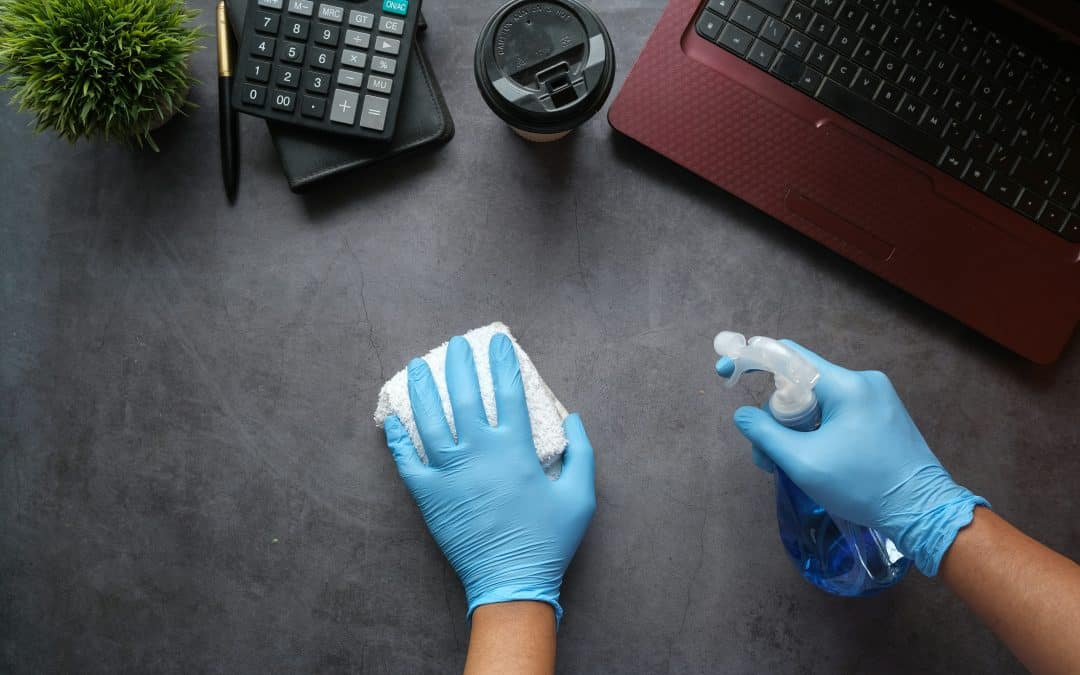
What it does: Kills bacteria, viruses, and fungi on surfaces. How it works: Disinfecting uses specialized chemicals (EPA-registered disinfectants) to kill pathogens. It doesn’t necessarily clean dirty surfaces or remove particles, but by killing the microscopic organisms, it lowers the risk of spreading infection.
The “Dwell Time” Factor: The biggest mistake people make when disinfecting is the “spray and wipe” method. Most disinfectants require a specific “dwell time”—staying wet on the surface for 3 to 10 minutes—to actually kill the germs listed on the label.
The Third Pillar: Sanitizing
While often grouped with disinfecting, sanitizing is slightly different. Sanitizing reduces the number of germs to a safe level (as dictated by public health standards). It is common in food-prep areas where you want to kill germs but don’t want to use the heavy-duty chemicals required for full disinfection.
Why the Distinction Matters for Your Business
If your janitorial team only “cleans,” they are leaving behind the invisible triggers for the flu, the common cold, and other seasonal illnesses. Conversely, if they only “disinfect” without cleaning the dust away first, the disinfectant may never reach the surface it’s meant to treat.
High-Touch Points: The Primary Targets In a professional office environment, certain areas require daily disinfection, not just cleaning:
-
Doorknobs and handles
-
Elevator buttons
-
Light switches
-
Shared printer/copier touchscreens
-
Breakroom faucet handles
-
Conference room tabletops
The Circle A Janitorial Advantage
At Circle A Janitorial, we don’t just “surface clean.” Our professional teams are trained in the specific protocols required to truly decontaminate a workspace. We use hospital-grade disinfectants and industry-leading techniques to ensure that your office isn’t just sparkling—it’s hygienic.
Is your office truly clean? Don’t leave the health of your employees to chance. Let the experts handle the science of sanitation.
Contact Circle A Janitorial today for a free quote and experience the peace of mind that comes with a professionally disinfected workspace.